Blog
What is Centrifugal Blower Fan
A centrifugal blower fan is a mechanical device that uses rotating impellers to move air or gases for various applications.
Read More
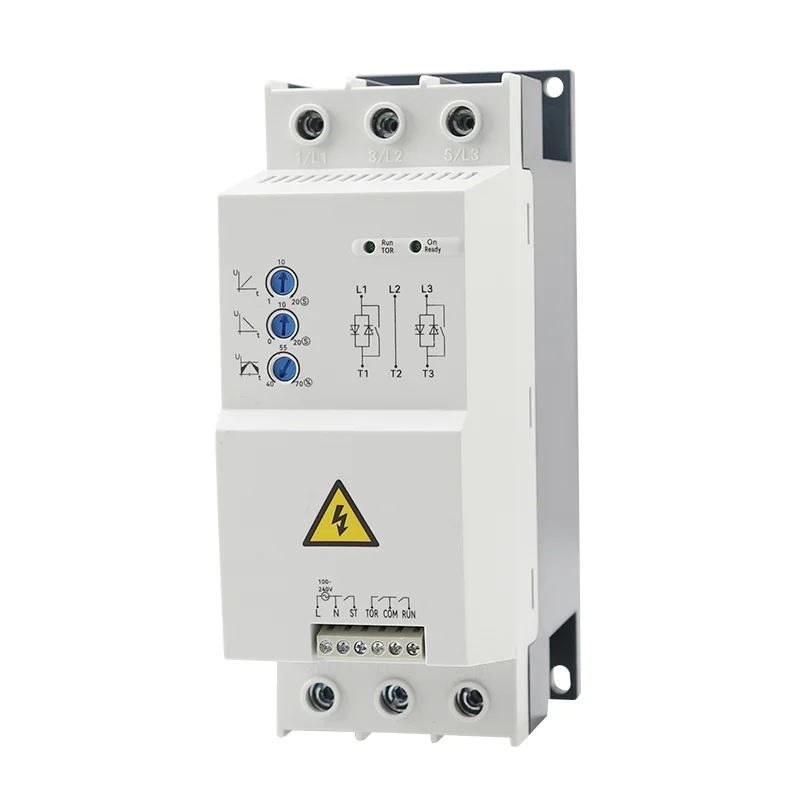
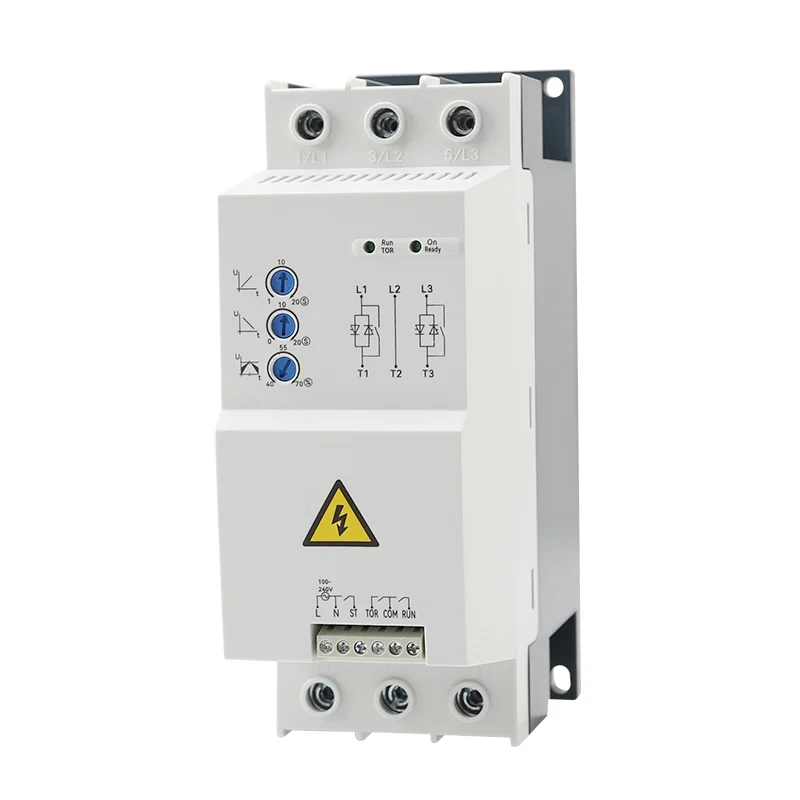
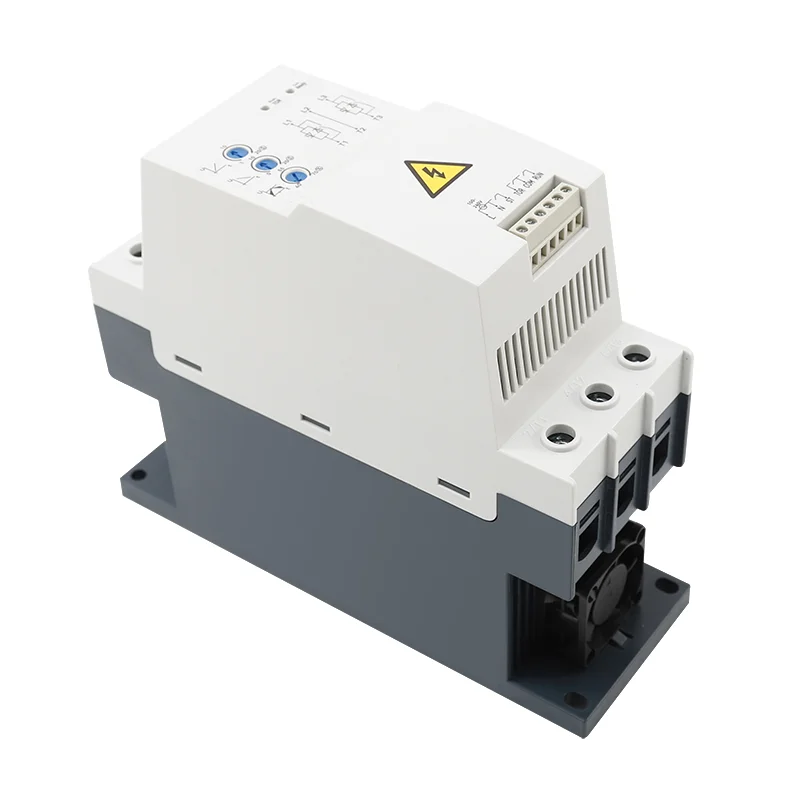
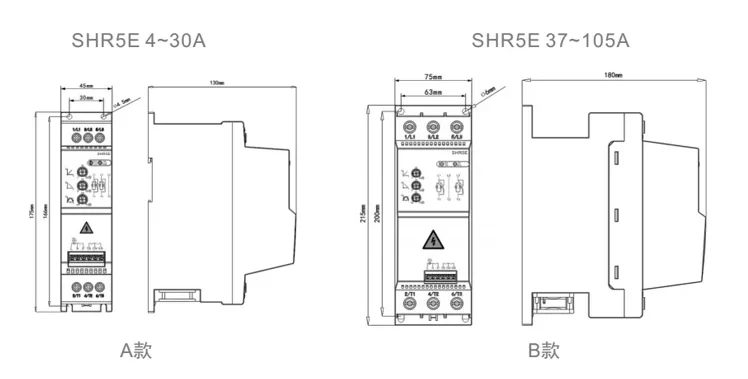
Miniature digital soft starter is an intelligent device used to control the start and stop of small motor, which can effectively reduce the current impact when the motor is started and protect the motor and power supply network. The following is a detailed introduction about it:
In recent years, the application of soft starters has been expanding. For large-scale equipment such as fans, pumps, air compressors, mixers, and ball mills, production processes often dictate that speed regulation and energy saving are not required. However, it is essential to utilize the soft starter’s function to achieve a “soft start.” Consequently, manufacturing units have sprung up to meet this demand, and their business continues to grow.
Soft starters are recommended in the following situations:
Micro digital soft starter usually adopts three-phase parallel thyristors as voltage regulator, and the conduction angle of thyristors is adjusted by electronic control algorithm, so that the input voltage of the motor is gradually increased from a lower value to the rated voltage, and the motor speed is gradually increased, thus achieving a smooth start. When stopping, the voltage gradually decreases and the motor slowly stops.
compact structure. For example, HPISE miniature digital soft starter adopts DIN guide groove base, which is easy to install and fix, and can be easily integrated into the control system. The operation is simple. Generally, the parameters are adjusted by centralized knob with LED indication. The power supply, working state and fault analysis are clear at a glance. It has a variety of protection functions, and can comprehensively protect and monitor short circuit, overvoltage, undervoltage and overload.
The ambient operating temperature for indoor installations shall not exceed +40°C, and the average temperature over a 24-hour period shall not exceed +35°C. The lower limit for the ambient air temperature is 0°C.
For electrical equipment without enclosures, the ambient air temperature refers to the air temperature surrounding the equipment itself; whereas, for equipment with enclosures, the aforementioned ambient air temperature refers to the air temperature surrounding the protective enclosure of the assembly.
Note: If the equipment is to be used in ambient air temperatures exceeding +40°C or below 0°C, the user should consult the manufacturer to verify which standards the product complies with or to establish a specific agreement.
The relative humidity shall not exceed 50% at +40°C. At lower temperatures, higher relative humidity is permitted; for example, 90% relative humidity at +20°C and below. The rate of change of relative humidity shall not exceed 5% per hour. However, it should be noted that due to temperature variations, occasional moderate condensation may occur.
Pollution Degree 3: There is conductive pollution, or dry non-conductive pollution that may become conductive due to expected condensation.
The installation site altitude shall not exceed 1000 meters.
As altitude increases, environmental factors change: atmospheric pressure decreases, thermal radiation intensifies, the diurnal variation of ambient temperature increases, and relative humidity decreases.
These changes can lead to variations in electrical equipment regarding cooling efficiency, tracking voltage, breakdown voltage of gases, arc-extinguishing performance (for switches), brush sparking (for motors), dielectric properties of insulators, and the airtightness of sealed enclosures. Such variations may affect the rated values of the equipment and performance parameters. When used under such conditions, the equipment shall be designed or selected based on an agreement between the manufacturer and the user.
Permissible Vibration at Installation Site:
Vibration Frequency: 10 ~ 150 Hz
Vibration Acceleration: ≤ 5 m/s²
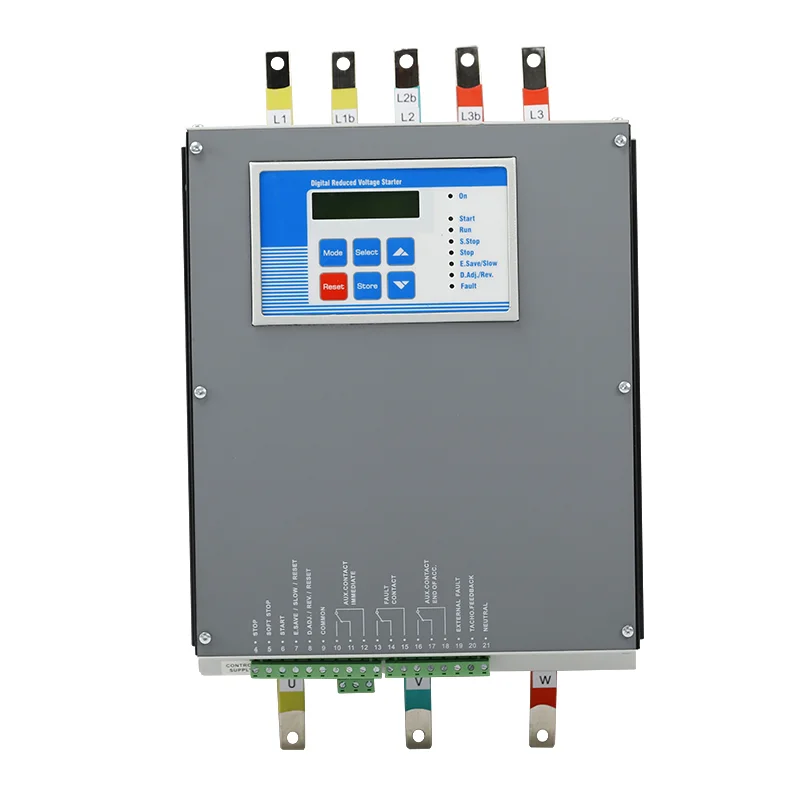
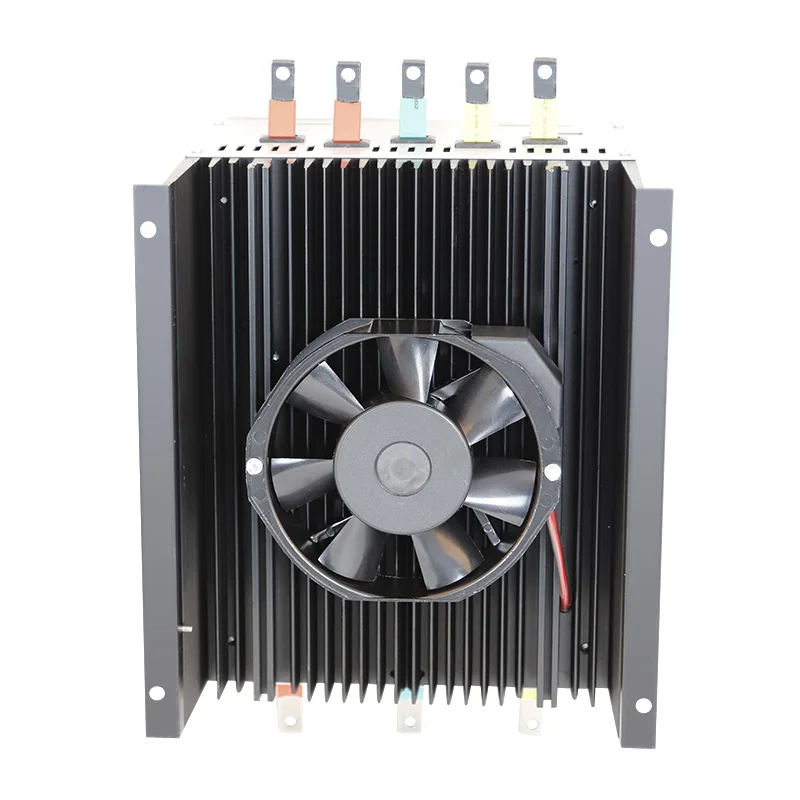
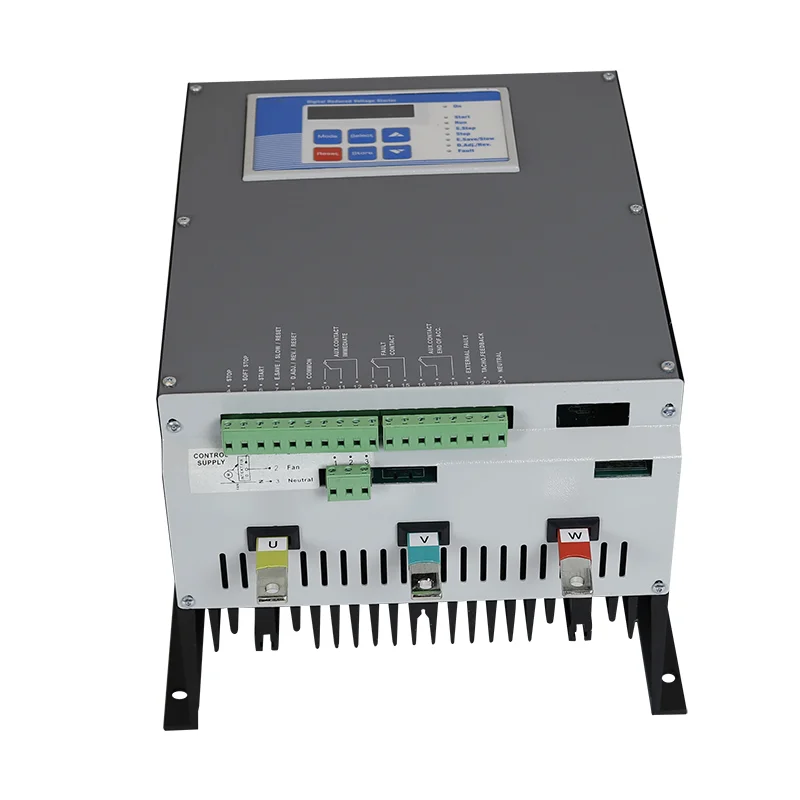
The product shown in the image above is a common inline soft starter. I will now analyze its product features, specifications, etc., one by one.
SHR2DN intelligent online motor soft starter, with its unique intelligent electronic circuit, provides perfect control and protection functions, can preset double restart and stop parameters to switch freely, can detect the load state and automatically realize light-load energy-saving mode operation. It has the functions of motor insulation detection and comprehensive protection against phase loss, short circuit, phase sequence and electronic overload, etc. It can be equipped with RS485 communication interface to realize comprehensive microcomputer remote control and detection, and can be widely used in textile, metallurgy, petroleum, chemical industry, water treatment, shipping, transportation, medicine, food processing, mining and mechanical equipment industries.
Pre-set Low-speed Operation (Forward/Reverse Control)
Provides unique acceleration/deceleration curve control and pump control programs.
Programmable Signal Relay
Perfect Start/Stop Control and Protection Functions
High reliability, capable of continuous in-line operation without a bypass.
Supports Multi-language LCD Display
Rated Voltage:230-690V
Rated Current:18-840A
Power Rating:230V(4-250KW)
400V(7.5-450KW)
525V(11-560KW)
690V(15-800KW)
Besides this model, we offer a wide range of other styles with various images. Specifications, functions, models, and application scenarios vary. Please refer to the next issue for more options and selection guidance.

A centrifugal blower fan is a mechanical device that uses rotating impellers to move air or gases for various applications.
Read More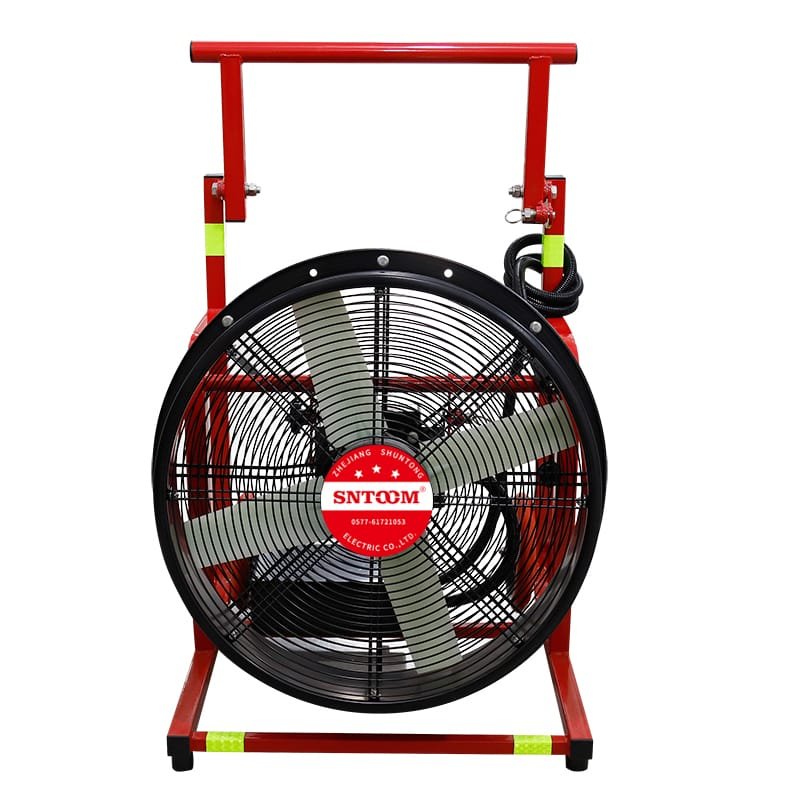
What is a smoke exhaust fan? A smoke extractor is a general:purpose mechanical device that uses a power unit to drive airflow, rapidly removing smoke, harmful gases, dust, or excess heat from a space. Its core function is to improve air quality, ensure personnel safety, or meet process ventilation requirements, and it is widely used in fire protection, industrial, and civil applications. Core Function of Smoke Extractors Core Structure of Range Hood (General Core Structure + Differentiated Design) Equipped with a swivel bracket and a tow handle; some models feature a foot-operated angle adjuster (for adjusting the airflow direction). For the fuel-driven model: an additional fuel tank, fuel line filter […]
Read More
Working Principle of Voltage Regulator Voltage regulator are essential components in electronics, ensuring that devices receive a consistent voltage supply. This is crucial for devices like car batteries, home outlets, and cell phones, which require specific voltages to function efficiently. Voltage fluctuations, often caused by factors such as power grid conditions, appliance usage, or environmental […]
Read More