

Media 1
Media 2
Media 3
Media 4
Media 5
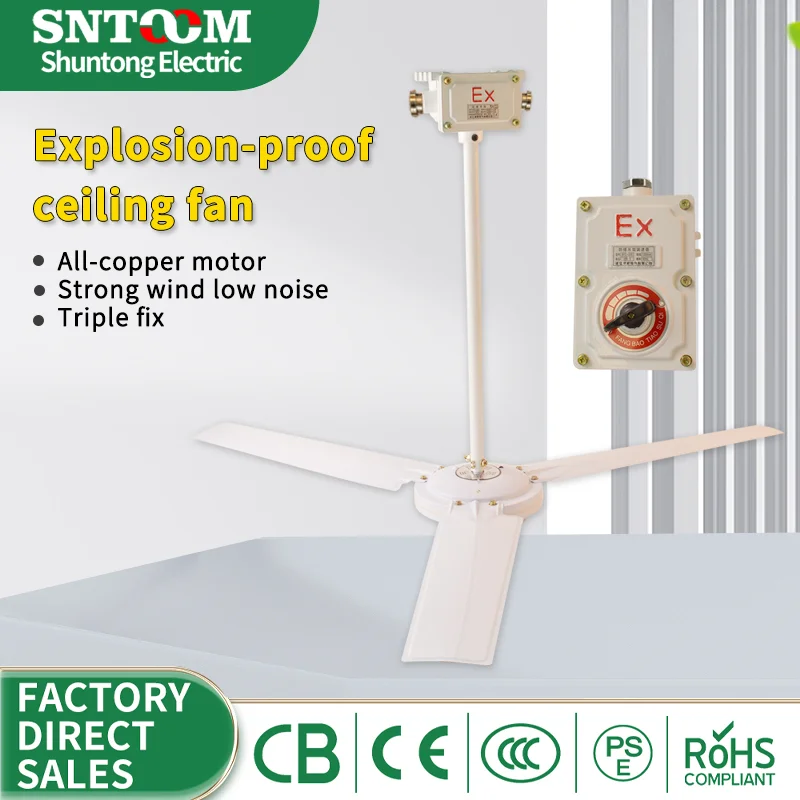
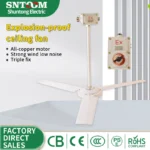
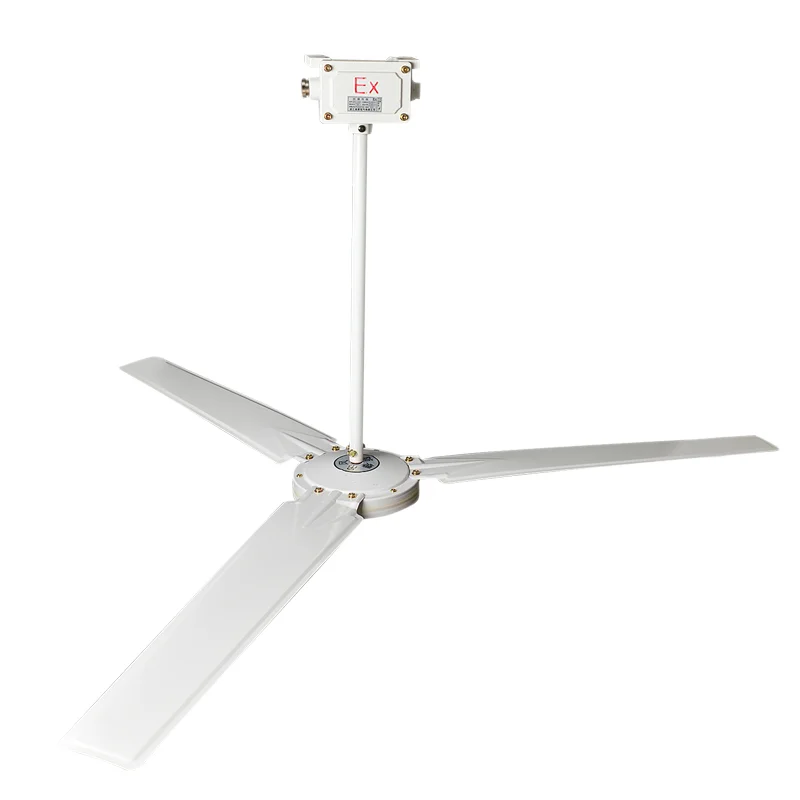
High Performance Explosion-proof ceiling fan BFC-1400 150W – Safe Industrial Ventilation
Explosion-proof fiberglass axial fan with Exd II BT4 certification, IP55 rating, and corrosion-resistant FRP housing. Ideal for hazardous/chemical environments, high airflow, low noise, durable copper motor.
- Voltage: 220V
- Power: 150W
- Frequency: 50Hz / 60Hz
- Type: Explosion-proof Ceiling Fan
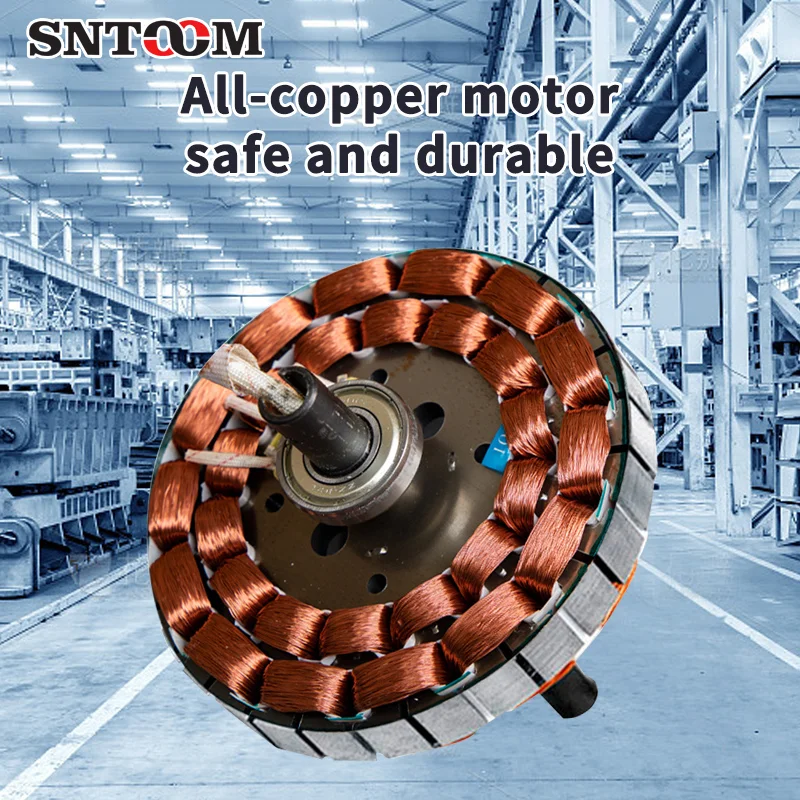
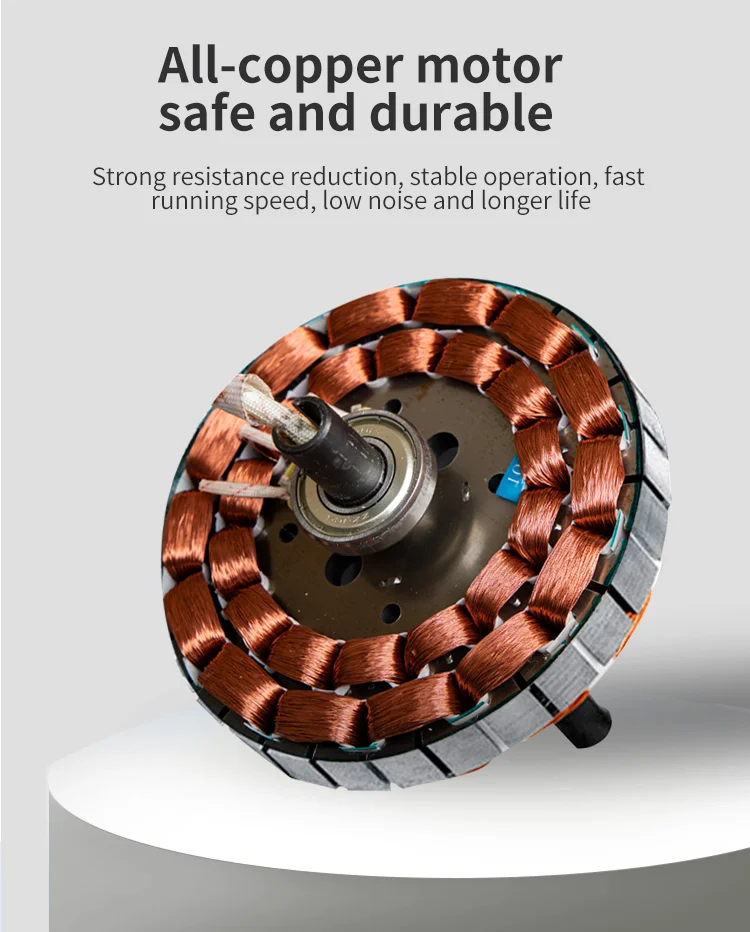
- Motor Material: 100% Copper Wire
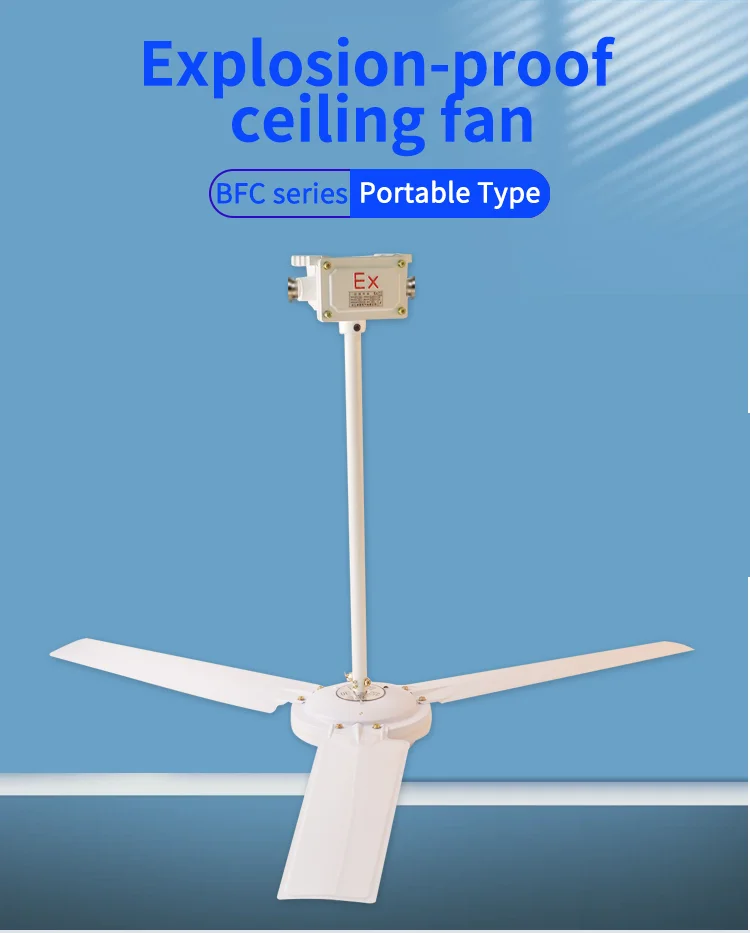
BFC Explosion-proof ceiling fan
1. Product Overview
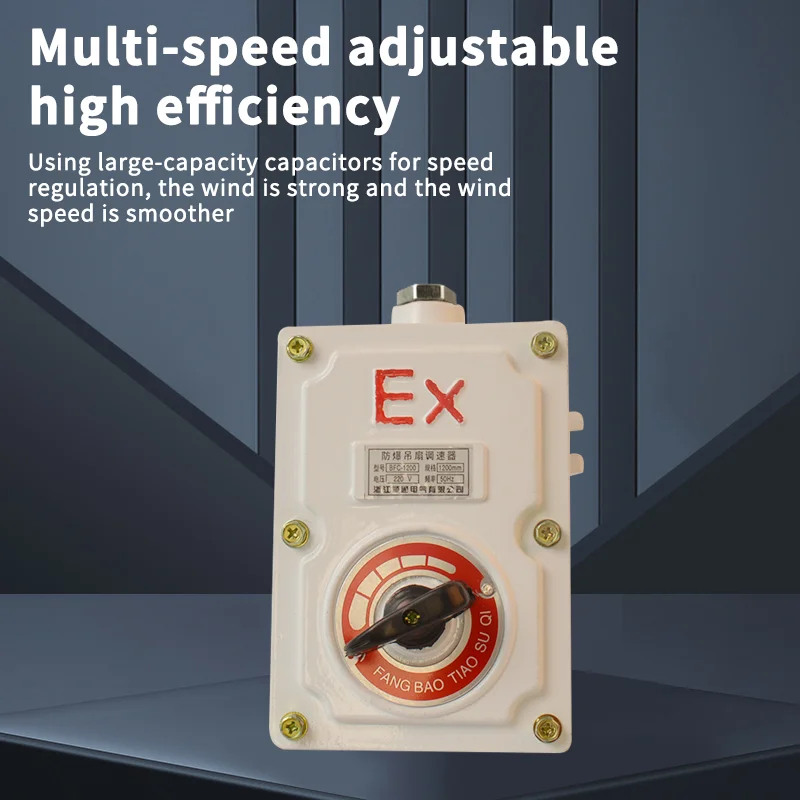
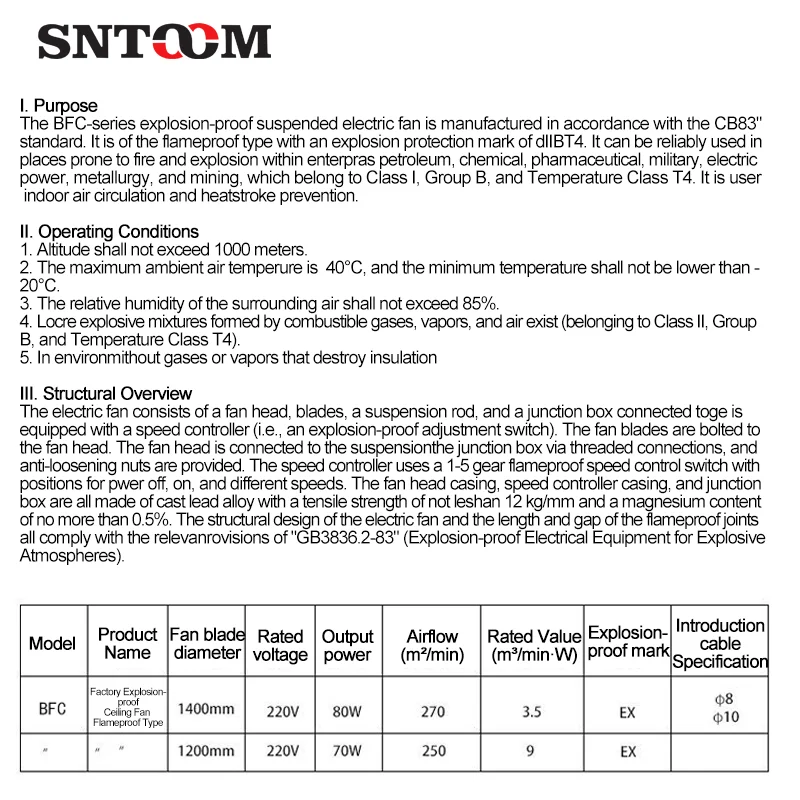
Explosion-proof ceiling fan is a high-performance industrial ventilation solution designed for hazardous and corrosive environments. Built with flameproof and anti-corrosion materials, this axial fan delivers reliable airflow while meeting strict safety standards. The fan combines durable fiberglass construction with an explosion-proof copper motor, making it ideal for facilities where flammable gases, vapors, or corrosive fumes are present. Unlike standard axial fans, this model features IP55 protection, ensuring stable operation in dusty, humid, or outdoor conditions.
2. Application Scenarios
Explosion-proof ceiling fan is widely used across industries requiring safe and efficient air exchange. Common settings include chemical plants, paint booths, oil and gas facilities, and warehouses storing flammable materials. The fan’s corrosion-resistant fiberglass housing makes it suitable for wastewater treatment plants, plating facilities, and laboratories with acidic or alkaline fumes. It also serves general industrial spaces such as factories, workshops, and parking garages, where ventilation is needed to reduce heat, humidity, and airborne contaminants. Whether for continuous operation or emergency exhaust, this axial fan adapts to diverse safety and performance requirements.
3. Technical Parameters
Explosion-proof ceiling fan comes in a full range of sizes to meet different airflow and pressure needs. Key specifications include impeller diameters from 280mm to 1000mm, with power ratings from 0.15kW to 5.5kW. The fan operates at speeds of 960–2900 r/min, delivering airflow volumes between 2000 m³/h and 46500 m³/h, with wind pressure ranging from 60Pa to 450Pa. The explosion-proof rating is Exd Ⅱ BT4, and the fan supports both 220V and 380V power supplies. Each model is precision-engineered to balance high performance with low noise, ensuring efficient ventilation without disrupting workplace operations.
4. Dimensions & Installation Layout
Explosion-proof ceiling fan features standardized dimensions for easy integration into existing ventilation systems. The fan’s casing, flange, and mounting holes are designed to match common duct sizes, simplifying installation for wall-mounted, duct-mounted, or free-standing configurations. Detailed dimensional drawings include parameters such as casing diameter (D1/D2), overall length (L), height (H), and bolt hole positions (N-d1, 4-d2), ensuring compatibility with different installation setups. Whether retrofitting an old system or designing a new ventilation network, this axial fan offers flexible sizing to fit specific spatial and airflow requirements.
5. Key Features & Advantages
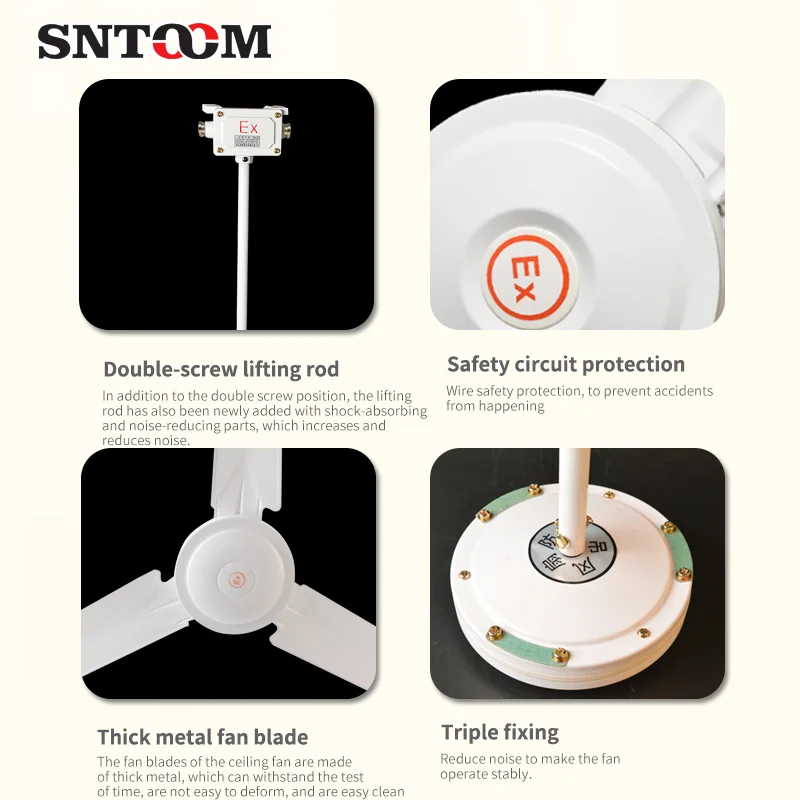
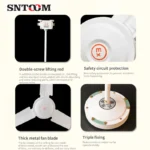
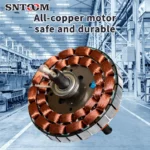
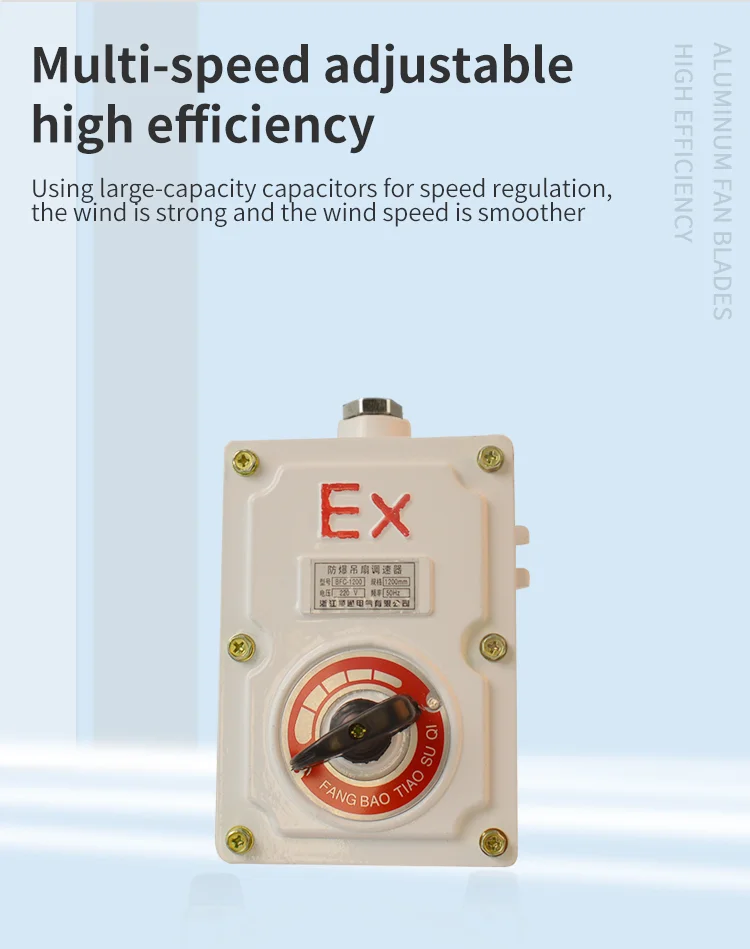
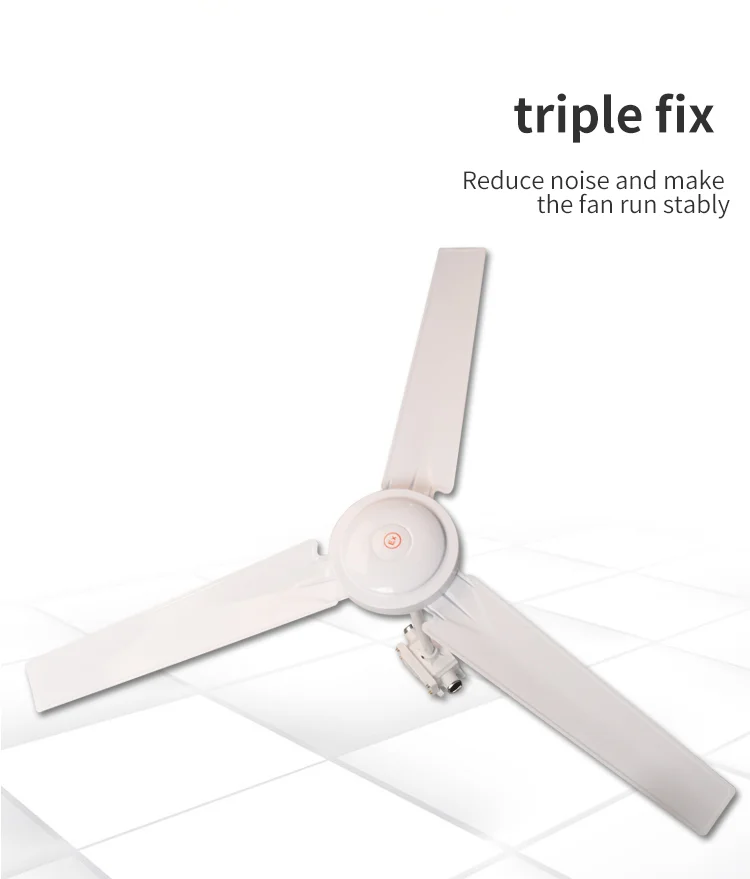
Explosion-proof ceiling fan stands out with a set of safety and performance-focused features. The fan’s fiberglass housing resists rust, corrosion, and chemical damage, extending service life in harsh environments. The explosion-proof copper motor delivers stable power while preventing ignition of flammable substances. Thickened fan blades maximize airflow efficiency, while the front safety grille protects against foreign objects and accidental contact. The fan’s IP55 rating ensures resistance to water spray and dust, making it suitable for both indoor and outdoor use. Low-noise operation and vibration-dampening motor brackets further enhance workplace comfort.
6. Installation & Usage Instructions
Explosion-proof ceiling fan installation must be performed by qualified personnel following safety guidelines. First, confirm the power supply matches the fan’s voltage rating (220V or 380V) and check that the explosion-proof motor’s wiring is sealed properly. Mount the fan securely using the provided flange bolts, ensuring airflow direction aligns with system requirements. Before operation, remove any obstructions from the fan blades and test for smooth rotation. Regular maintenance includes cleaning the safety grille and blades, inspecting motor connections, and verifying explosion-proof seals are intact. Never operate the fan without the safety grille, and always disconnect power before servicing.
Image description
Related Products