Harmonic Currents and K-Factor: Sizing a Transformer for Non-Linear Loads
A transformer feeding a plant full of variable frequency drives can run dangerously hot while a clamp meter reads less than its rated current. The instrument is not lying; the load is simply not sinusoidal. Harmonic currents are the reason a transformer k-factor exists as a separate specification, and ignoring them is one of the few ways to destroy a correctly sized unit without ever exceeding its nameplate.
Here is the content list:
- Why does a non-linear load heat a transformer more than its current suggests?
- What does a K-factor rating actually guarantee?
- How should a project size for harmonic currents?
Why Non-Linear Loads Heat a Transformer
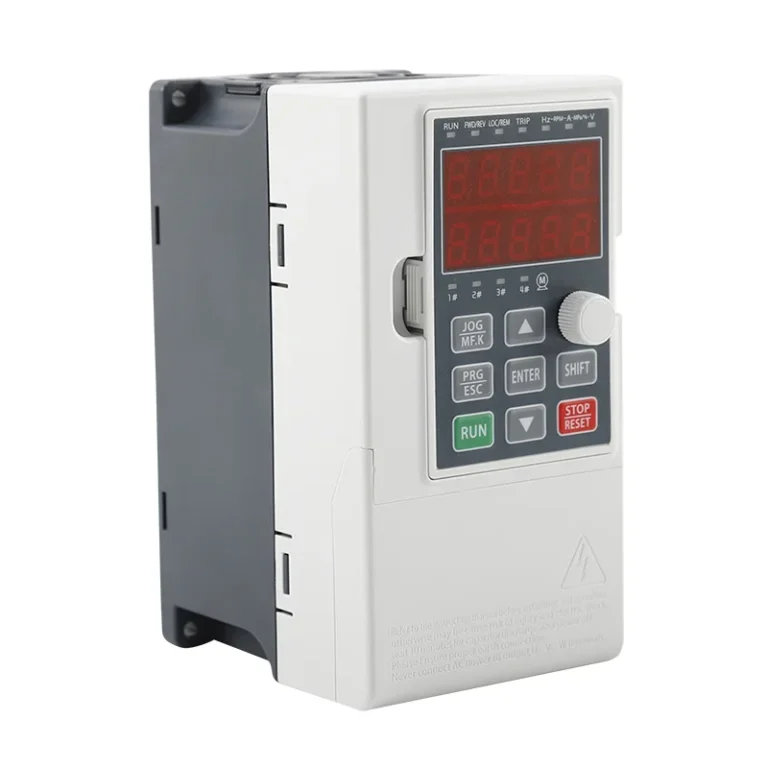
A conventional rating assumes the load current is a clean sine wave at the supply frequency. Rectifiers, variable frequency drive front ends, switch-mode supplies and modern lighting do not draw that shape. They draw current in short pulses, and a pulsed waveform contains harmonic currents at multiples of the fundamental.
Those harmonics matter inside the transformer for one reason: eddy current losses rise roughly with the square of the frequency. A fifth-harmonic component therefore produces far more winding heating than its amplitude alone would suggest, and the extra heat appears in the windings rather than in the core. The practical outcome is that the unit reaches its temperature limit while the fundamental current is still comfortably below the kVA rating, so a conventional transformer loaded to its nameplate on a harmonic-rich system is genuinely overloaded, and harmonic currents are the reason.
What a K-Factor Rating Means
A transformer k-factor rating describes how much harmonic loading a design can tolerate before it overheats. The number is not a measured property of the site; it is a statement about the transformer’s construction and its ability to absorb harmonic losses.
- Higher K-factor ratings require a specific design, typically a larger neutral, parallel winding conductors to reduce eddy losses, and in many cases electromagnetic shielding between primary and secondary.
- A K-rated unit does not remove harmonics from the system. It tolerates them. If the goal is to reduce distortion, that is a filter or a reactor question, not a transformer question.
- Neutral conductors deserve separate attention, because triplen harmonics add in phase and can overload a neutral sized only for the fundamental current.
How to Size for Harmonic Currents
- Measure or estimate total harmonic distortion at the point of connection, and record which loads produce it.
- Take a load profile, not a single reading, since total harmonic distortion rises when drives are lightly loaded and their share of the total current is highest.
- Match the K-factor to the mix, choosing a higher rating where drives, rectifiers or switch-mode supplies dominate and a lower one where they are incidental.
- Apply a derating factor rather than relying on the K-factor alone, because a K-rated unit still loses capacity in a hot plant room, and the two corrections stack.
Checks Before the Order Is Placed
- Confirm that the quoted kVA rating already accounts for the harmonic duty, or ask for the assumption to be stated.
- Confirm the neutral and, for a delta-connected primary, the circulating-current behaviour under unbalanced harmonic currents.
- Confirm the temperature rise class and the winding insulation, because harmonic heating accumulates where it is hardest to dissipate.
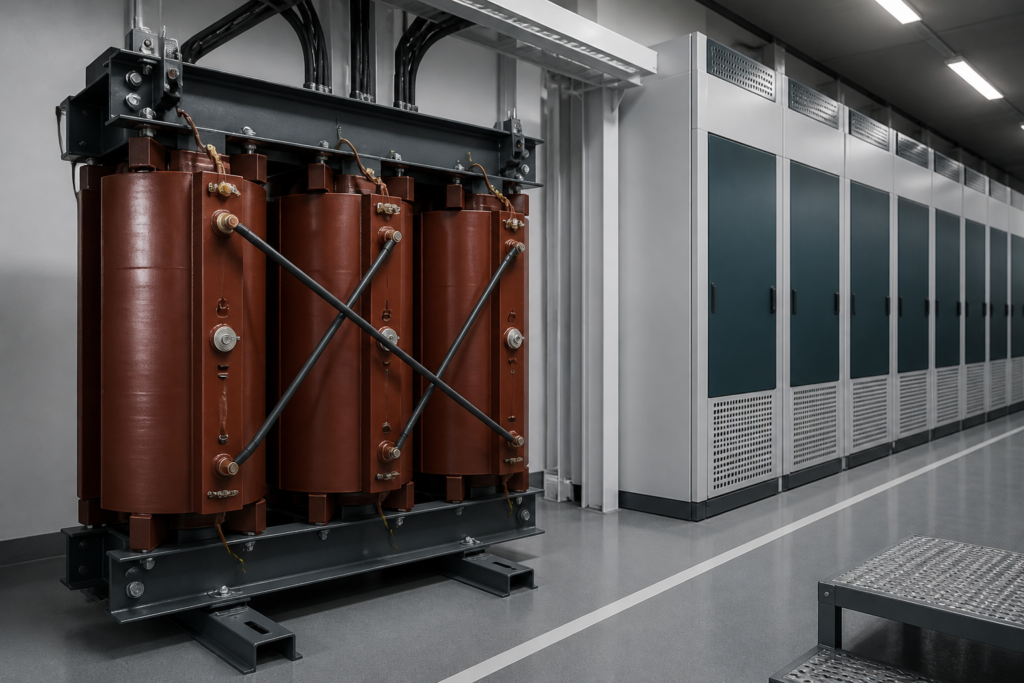
- For a dry-type transformer close to the drives it serves, confirm ventilation at the harmonic-corrected load rather than the nameplate load.
Conclusion
Harmonics punish the assumption that current tells you everything about loading, and the punishment lands on the insulation rather than on the meter. A transformer k-factor review, taken together with a derating factor for the real plant room, converts an invisible risk into a documented design decision. Zhejiang Shuntong Electric has more than 30 years of experience in electrical equipment and reviews the load characteristics, including harmonic content, with customers before a transformer is specified. Reliable power supply rests on engineering that accounts for the load as it actually behaves, not as a nameplate describes it.